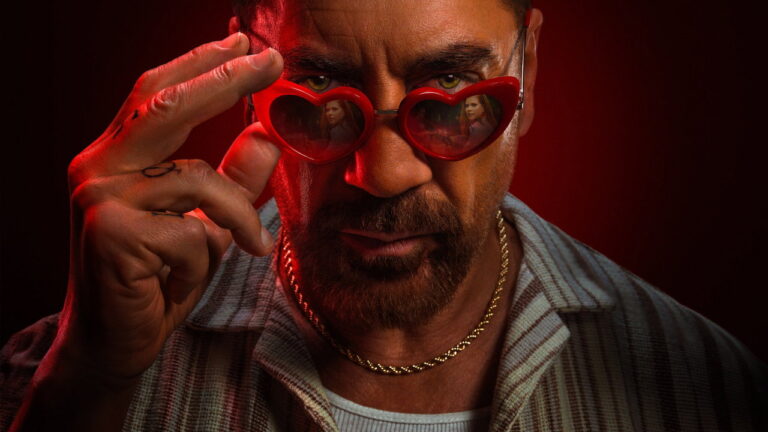
The Westies Season 1
J.K. Simmons plays a New York gang boss who never raises his voice, and that’s what makes him terrifying. The Westies spends eight episodes proving it deserved that kind of confidence, and by the finale it has earned every bit of it. This is the best show I watched all year, and almost nobody watched it with me.
The Irish gang known as the Westies is outnumbered by the Italian families running New York, but Javits Center construction money buys everyone an uneasy truce. Simmons plays Sweeney, the Westies boss; Tom Brittney plays Jimmy, his heir apparent, a guy with an actual honor code that makes him worse at this job than Sweeney ever was. Titus Welliver plays Glenn Keenan, a cop who grew up inside the Westies and stayed on their payroll until an FBI agent blackmails him onto her task force. Jimmy’s girlfriend Bridget is IRA, and she’s using him to bury a past life she never fully left behind.
Every one of these people is a bad guy, and the show never asks you to forget it.
The structure is the first thing that separates The Westies from a decade of mystery-box television. An episode ends, the next one starts, and you don’t know how much time passed until someone mentions in passing that the thing you just watched happened a month ago in-show. That gap does real work. Relationships escalate off-screen and land as fact instead of exposition, so betrayals and wars feel built instead of rushed. Most shows compress a season into weeks because the writers need everything to happen fast. The Westies lets years pass, and the finale is more believable for it.
The cast earns the slow burn. Simmons plays cruelty as calm, the same stillness that made him terrifying in Whiplash, stretched across a full season. Brittney carries the show more than Simmons does, playing a man raised into this life who wants out of it and knows he won’t get there without losing everyone he loves. Welliver’s Keenan is the character who takes the longest to land. He spends the early episodes as a question mark, cop or criminal or coward, and the moment he finally picks a side is the moment the character starts working.
What holds the whole thing together is a moral-grey cast that actually earns the term instead of hiding behind it. Line up everyone on a D&D alignment chart, and you’re stacking bodies in the evil and neutral columns. Sweeney is evil. Bridget is planning assassinations. Jimmy guns down anyone who crosses his men while telling himself he has principles. The FBI agent running the task force is willing to look away from her own cop’s corruption if it gets her closer to Sweeney. Nobody here is rooting for redemption, and the show still makes you root for the outcome.
My one hesitation for most of the season was Bridget’s revenge arc. Six weeks of characters talking around it without much happening had me ready to call it the show’s weak link, and then the finale lands it and the wait turns into the point. I won’t spoil what happens. It earns the setup.
The season closes as a complete story, which matters more than it should in a business built on cliffhangers. A second season could exist. The first one doesn’t need it to justify the time you spent watching it, and honestly, given how good this ending is, I’d almost rather they left it here.
The real failure belongs to MGM+. I found this by accident scrolling a release calendar, clicked because I recognized Simmons’s name, and discovered almost nobody else had seen it. It’s sitting under twenty reviews on Rotten Tomatoes for a show this good. The marketing team let a JK Simmons crime drama die quietly while shows with a fraction of its craft get renewed on name recognition alone.